Insights
What affects custom software development cost?
Understand the scope, assumptions and delivery work behind a software estimate, with practical examples from Windows application development.
A useful custom software estimate explains what will be delivered and the assumptions behind the work. A price without a clear scope is difficult to compare, even when two proposals appear to describe the same application.
If you are planning a Windows application, start with the workflow it must support. The examples below show how to turn that idea into questions a development team can estimate. They are scope examples, not quoted project prices.
What goes into a software development estimate?
Implementation is one part of the work. A complete proposal should also explain requirements, interface design, integration, testing, delivery and what happens after launch. The balance depends on the application and the material already available.
| Area | Questions to resolve |
|---|---|
| Workflow | What is the essential user task? Which exceptions must the first release handle? |
| Data | Which files or records are involved? Does existing data need importing or cleaning? |
| Integrations | Are the external systems documented? Is a test environment available? |
| Offline use | Should the app keep working without a connection? What needs to happen when connectivity returns? |
| Access | Who can see or change information? Are different roles required? |
| Delivery | Which devices and operating systems need support? Who installs and updates the app? |
| Acceptance | Which real scenarios will demonstrate that the application is ready? |
- User workflowsWho uses it, what they need to complete and which exceptions matter.
- Data & integrationsRecords, permissions, external services and migration requirements.
- Quality & releaseDevice coverage, critical-path tests, deployment and handoff.
- After launchSupport responsibilities, maintenance and later improvements.
A qualitative scope checklist, not a price breakdown. Agree the included work before comparing estimates.
Start with the smallest useful release
A first release should complete a real task. Reducing scope works best when it removes optional workflows while keeping the essential one usable from beginning to end.
For example, a document-processing tool might initially accept one agreed file format and export one type of result. Supporting several document formats, batch processing, shared accounts and synchronization would introduce additional work. These options should be visible in the proposal so you can decide which ones matter now.
Separate your requirements into three groups:
- Essential: without this, the core workflow does not solve the problem.
- Useful later: valuable, but a person can complete the task without it.
- Unresolved: needs a technical check or a clearer business decision before estimating.
A desktop example: decisions visible in Glagol
Glagol, our multilingual Windows speech application with English and Russian support, illustrates why similar-looking features can have different implementation requirements.
Speech recognition can run through optional local components or a configured remote service. Those choices involve different setup, download, connection and failure states. The interface also needs to explain which component is installed and where processing happens. Independent interface and speech languages add model selection, localized states and language-specific validation to that scope.
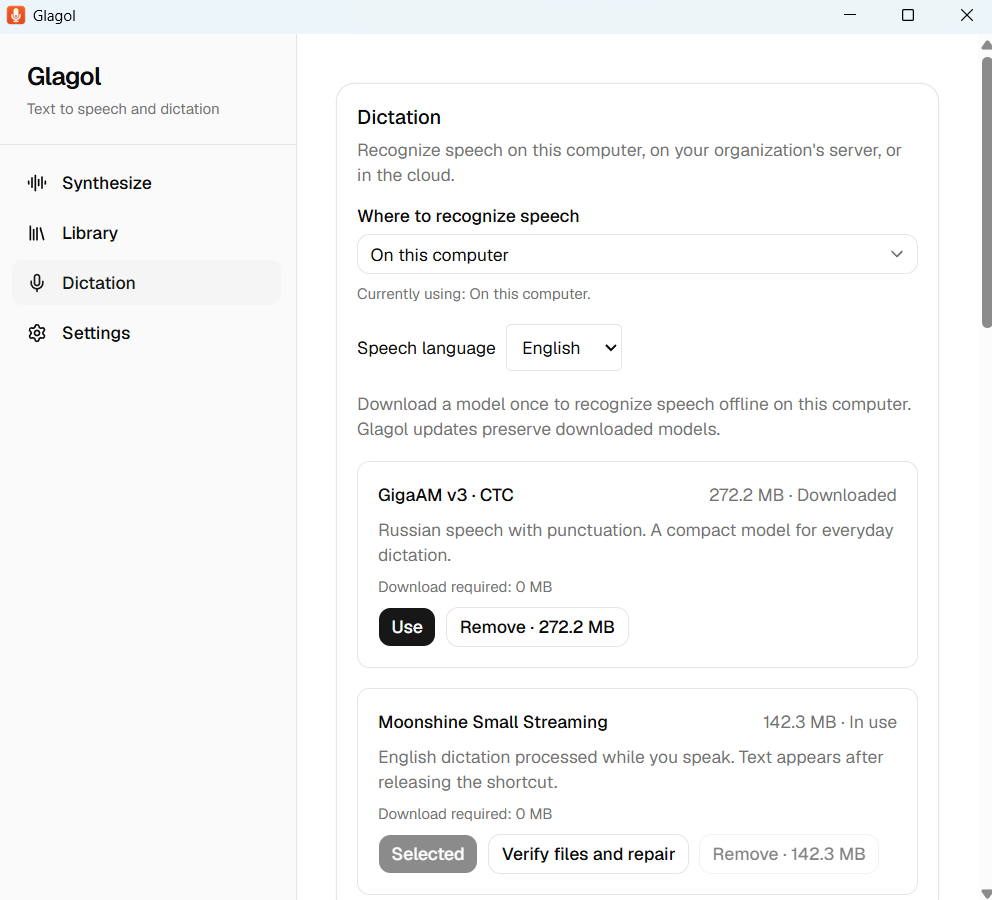
A screenshot of a settings page represents only the visible surface of that work. The estimate needs to account for behavior behind the controls and the conditions under which it will be tested.
This is an example of scope, not a published Glagol budget or a claim that every project needs the same technology.
Why an initial range can change
An early estimate may rely on assumptions: an external API behaves as documented, sample files represent the real data, or one Windows environment is sufficient for the first release. If those assumptions change, the work can change too.
Ask for the assumptions to be written alongside the estimate. For uncertain integrations, a small technical investigation can provide information needed to refine the plan before committing to the entire implementation.
Compare proposals on the same scope
Before comparing totals, check whether the proposals include the same deliverables. A prototype, an installable application and a maintained production system are different commitments.
- Which user workflows and integrations are included?
- What testing and acceptance criteria are specified?
- Are installation, updates and documentation included?
- Who supplies access, sample data and feedback?
- Which recurring services, licenses or hosting costs sit outside development?
- How are scope changes and post-launch support handled?
Plan for the work after launch
Clarify who will operate the software and how future changes will be made. Depending on the project, ongoing work may include support, compatibility updates, backups or third-party service changes. Identify ownership and likely cost categories even when a maintenance agreement will be discussed separately.
What to send for a more useful estimate
Describe the person using the application, their main task and what success looks like. Add a safe example of the input and desired output, any existing systems it must connect to, and known constraints such as offline use or a target date.
You do not need to choose a framework first. The implementation approach should follow the requirements and the people who will maintain the product.
Get a free project report for your Windows app idea
AxionAI can review your idea and outline a proposed first release, implementation approach, key questions and delivery stages. Where the information supports it, the report includes an initial budget and timeline range with explicit assumptions. A confirmed quote follows an agreed scope.