Business Automation & Integrations
Business automation that connects your tools and workflows
Connect the tools your team already uses and define what should happen when data changes. We scope and build API integrations, CRM workflows and operational notifications around your process, with clear exceptions and ownership after delivery.
- EventDefine what starts the flow: a new record, an update or a scheduled check.
- Data checksAgree required fields, record ownership and duplicate handling.
- Human reviewKeep an approval step where your operating rules require one.
- Agreed actionMap the accepted data to a defined action in the destination system.
- ResultRecord the outcome and decide who needs to be notified.
- Exception pathAt any stage, route a failure to an agreed retry or a responsible person.
An illustrative design map, not a delivered CRM connector. The exact order, approval rules and retry behavior are agreed for your systems; exceptions can occur at any stage.
API integration services for existing systems
Connect the systems that hold your customer, order or operational data. We agree which records move, which system is authoritative and what happens when an update fails.
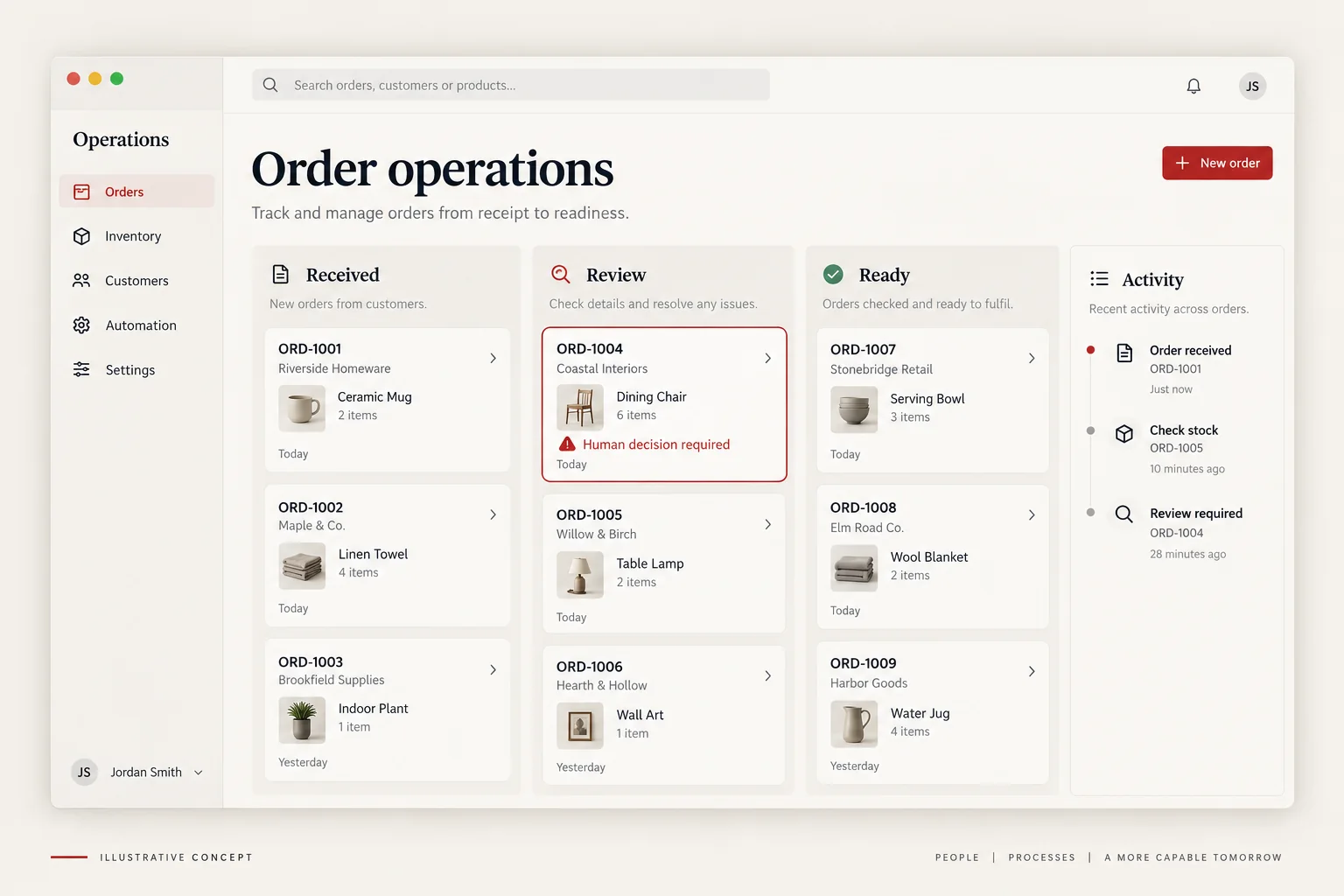
CRM integration services, scoped to your platform
We start by checking your CRM’s integration options, permissions and data model. The agreed scope defines field mapping, sync direction, duplicate handling and any steps that still need human review.
Custom workflows and operational notifications
Define the event that starts the workflow, the action it should trigger and the person responsible when an exception needs attention.
Telegram bots can provide an entry point or notification channel where they fit the workflow. The scope defines the actions, recipients and permissions before implementation.
From a customer order to an operational workflow
GetDeliver connects a Telegram ordering flow with server-side order handling. Its documented staff workflow covers order confirmation, preparation and courier handoff, with role-specific notifications in the Android administration experience. Staff remain responsible for the operational decisions and status changes.
This is an example of connecting a customer-facing entry point to the people handling the work. Your integration would be scoped around your systems, data and operating rules.
From workflow mapping to handoff
We review the systems and available access, agree the data mapping and exception rules, then implement the selected flow. Testing covers the agreed normal and failure scenarios before deployment and a documented handoff.
A new standalone product has a different scope from connecting existing tools. Hosting and ongoing operational responsibilities are also agreed explicitly.
Explore SaaS development for a new product
Explore production infrastructure and deployment
Scope, costs and ongoing ownership
Automation or integration — from $600. The final quote depends on the systems, access, data mapping and failure handling involved. Larger work is quoted after discovery. Third-party subscriptions and ongoing support are scoped separately.
Questions about business automation
Can you connect our CRM to another system?
We first check the integration options and access available in both systems. The scope then defines which records and fields move, in which direction, and how duplicates and exceptions are handled. A particular connector or platform is not assumed before that review.
Do we need to replace our existing tools?
The starting point is your current workflow. We assess what can be connected through supported interfaces and identify any limits before proposing a new component or replacement.
What happens if an integration fails?
Failure handling is part of the agreed design. We define which failures can be retried, which need a person to review them, and what information your team needs to resolve them. Monitoring and support responsibilities are documented in the scope.
Can a workflow keep a human approval step?
Yes. The workflow can be designed around a review or approval step instead of automatically applying every change. We agree who makes the decision and what happens afterwards.
What do you need for an estimate?
Tell us which systems are involved, what information moves between them, the event that should start the workflow, and the current manual steps. API documentation, expected record volumes and a sample using test data help define the scope. Do not include passwords or API keys in the inquiry form.
Is maintenance included?
Implementation, documentation and handoff are defined in the project scope. Ongoing monitoring, changes to third-party APIs and support are agreed separately.
Which workflow should we connect?
Tell us which systems you use, what moves between them and where the manual work happens.